
International Intercultural Communication Week (BIP) at the IBA
Intercultural Communication for the Global Workplace
– with Anatolie Cantir
Project Title: Intercultural Communication for the Global Workplace
Location: International Business Academy, Havneparken 1, 6000 Kolding, Denmark.
Dates: 14-18th June 2027 (arrival on Sunday, 13th June)
Registration deadline: 1st March 2027. Register HERE (TBA soon)
Virtual component: Tuesday, 1st June 2027 – Click here to join
Credits: 3 ECTS
BIP project number: 2025-1-DK01-KA131-HED-000319990-7
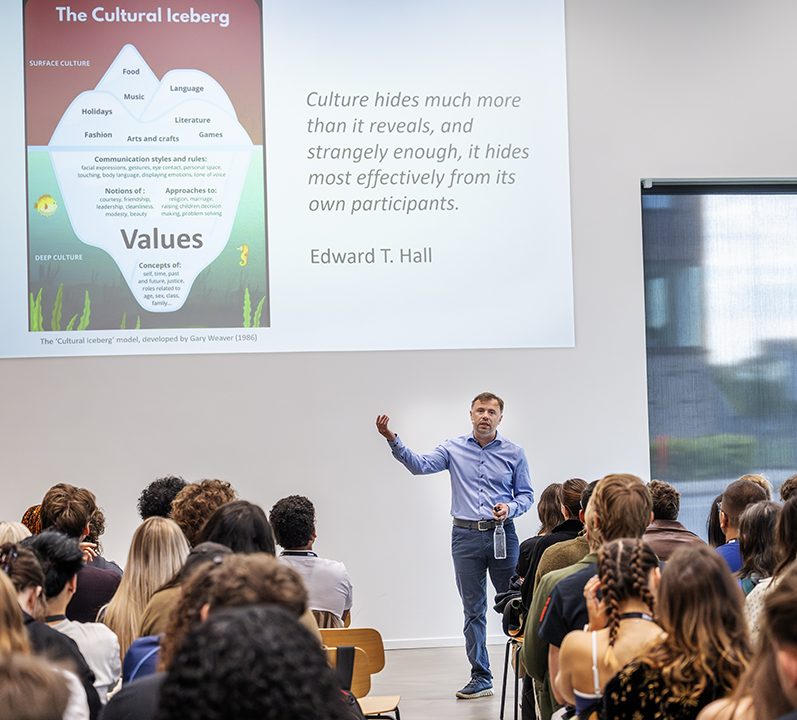
The LENSES approach
How does the world look when we change the lens through which we see it? In this practice-based project, students explore intercultural communication by using cultural theories, models and research as lenses. Each tool directs attention to different aspects of the same situation, helping students notice patterns, question first impressions and develop more informed interpretations.
LENSES is the organising idea of the project: the tools are the lenses through which students look at the world. Students move between them to examine communication, behaviour, values and collaboration in everyday life and the global workplace. The aim is to learn how to use a lens, recognise what it reveals and consider what it may leave out.
Purpose and practical approach
The project develops students’ ability to understand and respond to cultural differences in international working environments. It connects theory with observation, discussion and practical case work. Students investigate how people create meaning, organise work, relate to authority and negotiate expectations that are often taken for granted.
Students work in groups with a shared intercultural situation. This may be a workplace case, an observed interaction or a situation from their own experience. They first describe what happened, then use several lenses to explore possible explanations. Their analysis should distinguish observable behaviour from interpretation and lead to practical suggestions for communication and cooperation
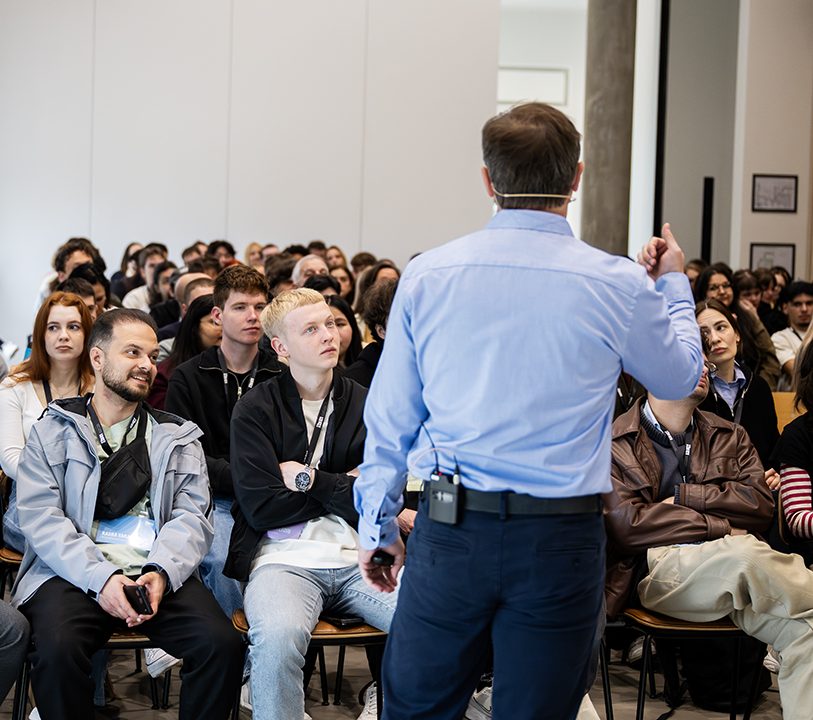
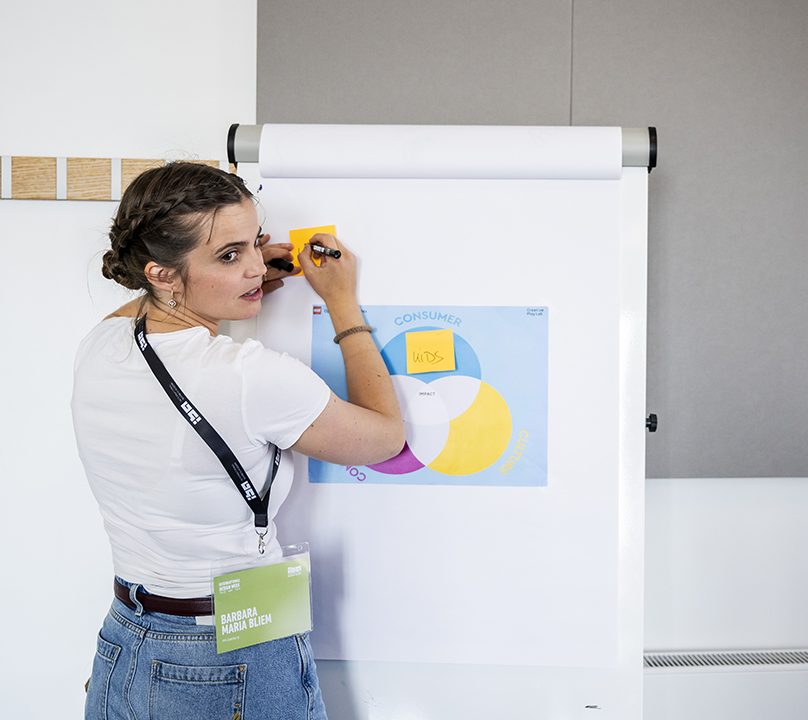
Working critically with the lenses
A lens offers a perspective, not a complete explanation. National patterns cannot determine how an individual thinks or behaves. Students should also consider personality, profession, organisational culture, language and the specific circumstances. They use cultural models to generate questions and possible explanations, then check these against evidence.
Comparing lenses is central to the project. For example, a disagreement in a team might raise questions about authority through Hofstede, implicit expectations through Hall and the meaning of a local practice through Geertz. Students explain where these interpretations support one another and where they differ.
Preliminary tools as lenses
Geert Hofstede – Cultural Dimensions Theory
A lens on national cultural patterns, including power distance, individualism and uncertainty avoidance. What assumptions about hierarchy, independence or uncertainty might be shaping this situation?
Fons Trompenaars and Charles Hampden-Turner – Seven Dimensions of Culture
A lens on cultural dilemmas involving rules, relationships, emotions, status, time and the environment. Are people applying different expectations about what is fair or appropriate?
The GLOBE Study – Culture and Leadership
A lens on cultural practices, values and expectations of effective leadership. What do people expect a good leader to do, and how might those expectations differ?
Edward T. Hall – Culture and Intercultural Communication
A lens on context, space and time. How much meaning is stated explicitly, how much is assumed, and how are silence, distance and punctuality interpreted?
Richard D. Lewis – The Lewis Model
A lens on linear-active, multi-active and reactive tendencies in communication and working styles. How do people approach planning, conversation, listening and relationships?
Iris I. Varner and Linda Beamer – Intercultural Communication in the Global Workplace
A lens on how cultural assumptions shape workplace messages and cooperation. How could the same message acquire different meanings for different audiences?
Clifford Geertz – Interpretive Anthropology and Webs of Significance
A lens on the meanings people give to symbols, rituals and everyday behaviour. What does this action mean to those involved, and what context is needed to understand it?
European Values Study – EVS
An empirical lens on values concerning family, work, religion, politics and society. What do the survey findings suggest, and how well do those patterns help explain the case?
The accompanying Tools document provides the sources for these eight lenses.
The student project
- Each group selects a focused intercultural question and investigates it through at least three of the tools. Groups choose lenses that offer different perspectives and explain why these are useful for their particular question.
- Describe the situation and formulate a clear question. Separate what you observed from what you initially assumed.
- Select and explain the lenses. Identify the concepts or dimensions you will actually use.
- Apply each lens to concrete evidence from the case. Identify what it helps you notice and what remains
unexplained. - Compare the interpretations. Consider alternative explanations and the limits of your evidence.
- Propose practical responses. Explain how your findings could improve communication or cooperation.

Presentation and reflection
Groups present their question, evidence, selected lenses and findings. They show how changing lenses changed their understanding and justify their practical recommendations. They identify uncertainties and explain what further information they would need. Each student reflects on an initial assumption they reconsidered during the project.
Main questions
- How does our own cultural background influence what we notice and how we judge others?
- What becomes visible when we examine the same situation through different tools?
- How can we investigate cultural differences without turning patterns into stereotypes?
- How can cultural insight lead to more effective communication and collaboration?
Learning outcomes and competencies
By the end of the project, students will be able to:
- Explain and apply selected cultural tools to concrete intercultural situations.
- Distinguish observation, interpretation and generalisation, and support their analysis with evidence.
- Compare what different lenses reveal and assess their relevance and limitations.
- Recognise how cultural expectations may influence communication, teamwork and leadership.
- Develop and justify practical responses to intercultural misunderstandings.
- Reflect on their own assumptions and adapt their approach to unfamiliar contexts
About Anatolie
Anatolie arrived in Denmark 22 years ago from his native Moldova and made the town of Herning his home. His drive, curiosity and ‘obsession’ about how other people think and live made him reflect a lot about the Danish culture and society by turning complex cultural patterns into clear, relatable insights. It has also motivated him to travel the world and think about his own international background while taking root in ‘little’ Denmark.
Anatolie is the author of two books on Danish culture, and he has held many talks the topic all over Denmark. He has initiated and has been part of a variety of international organizations and initiatives in Denmark with the goal to support internationals in Denmark. Anatolie has been teaching Intercultural Communication at Aarhus University and other universities in Denmark. Currently, he is a full-time associate professor at VIA University College. He is married to Vimke, who is Dutch. They have a son, Oliver, and twin girls, Arya and Julia. He is a big fan of sauna and has even built one himself in his garden. He also enjoys good vodka and classic mafia films.
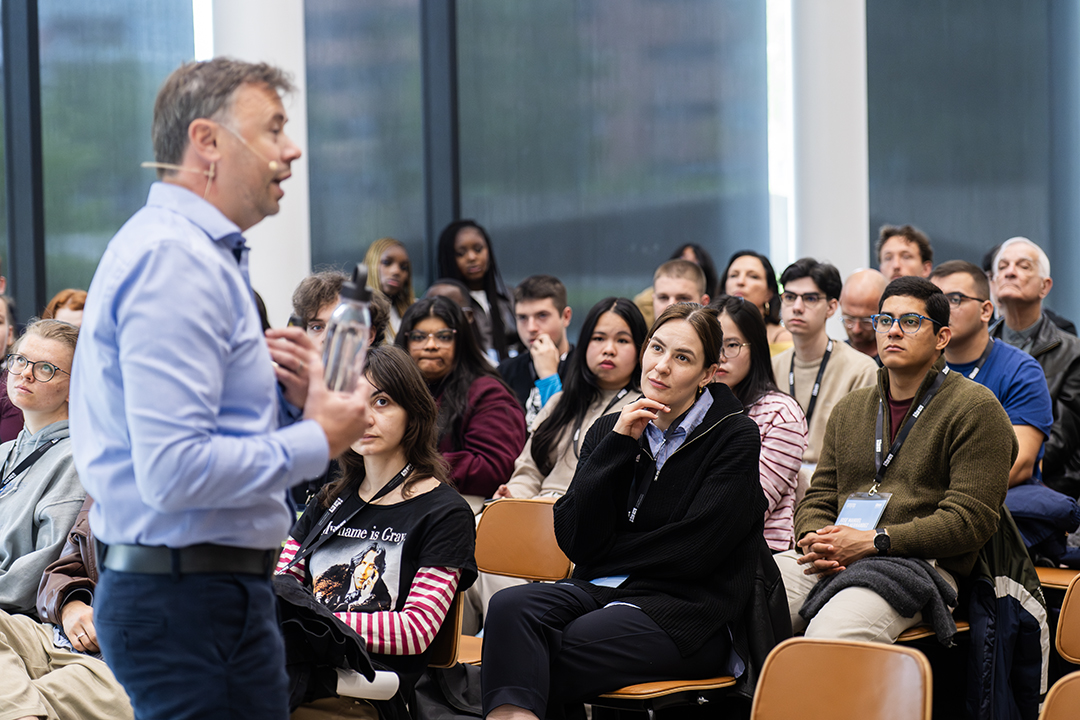
"I’m excited to gain new perspectives on my field, as I believe people think differently across cultures."
Studies Creative Media Management in Belgium

""Here at the IBA, we learn through discussion in group work. Talking with the others, I've realised that there are different ways of learning across cultures."
Studies E-Business in Belgium

– The purpose of the week is to strengthen our international collaboration, intercultural understanding, and exchange of ideas.

Practical information
Location: International Business Academy, Havneparken 1, 6000 Kolding, Denmark
Dates: 14-18 June 2027 (arrival on Sunday, 13th June)
Registration deadline: 1st March 2027. Register HERE. (TBA soon)
Virtual component: Tuesday, 1st June 2027 – Click here to join.
Credits: 3 ECTS
Price: 350€ (2.590 DKK)
Included in the price:
- Accommodation (5 nights, Sunday to Friday)
- Breakfast (x 5, Monday to Friday)
- Lunch (x 5, Monday to Friday)
- Dinner (x 2, Monday & Thursday)
Participants are kindly requested to bring traditional snacks/sweets/candy from their home country, for the ‘International Food Tasting’ that is included in participants’ presentations of their school and country.
Transportation
Billund Airport (BLL) is the closest airport to Kolding. There is a direct bus from the airport to Kolding (no. 166), but please note that bus transportation is not very frequent in the evening.
Copenhagen Airport (CPH) is about 2.5 hours away from Kolding, with frequent train and travel times.
You can use RejsePlanen to plan your journey, if you are using public transportation.
Accommodation
Kolding Hotel Apartments
Kedelsmedgangen 2,
DK-6000 Kolding, Denmark
https://www.koldinghotelapartments.com/
The rooms are pre-booked for participants of the international week. Students will be divided into apartments by gender, and each apartment has the capacity for six students (two-four in each bedroom), with a shared kitchen and bathroom. The accommodation is in downtown Kolding, around 1.5 km away from IBA (7-10 minutes’ walk).
IBA Coaches
Anatolie Cantir
Associate Professor, Cultural Analyst, Author & Speaker.

| Ildikó Antal |
| ilan@iba.dk |
| +45 25 28 45 47 |
| Director, IBA International & Confucius Institute |
If you have any questions, please write to us at studyexchange@iba.dk
Contact

| IBA International Office |
| studyexchange@iba.dk |
| Student & Staff Mobility |
| Ildikó Antal |
| ilan@iba.dk |
| +45 25 28 45 47 |
| Director, IBA International & Confucius Institute |