
International Global Business Week (BIP) at the IBA
Global Business and AI-Driven Decision Making
Location: International Business Academy, Havneparken 1, 6000 Kolding, Denmark.
Dates: 21-25th June 2027 (arrival on Sunday, 20th June).
Registration deadline: 1st March 2027. Register HERE (TBA soon)
Virtual component: Tuesday, 27th of April 2026, from 4:00 PM to 5:30 PM
Credits: 3 ECTS
BIP project number:
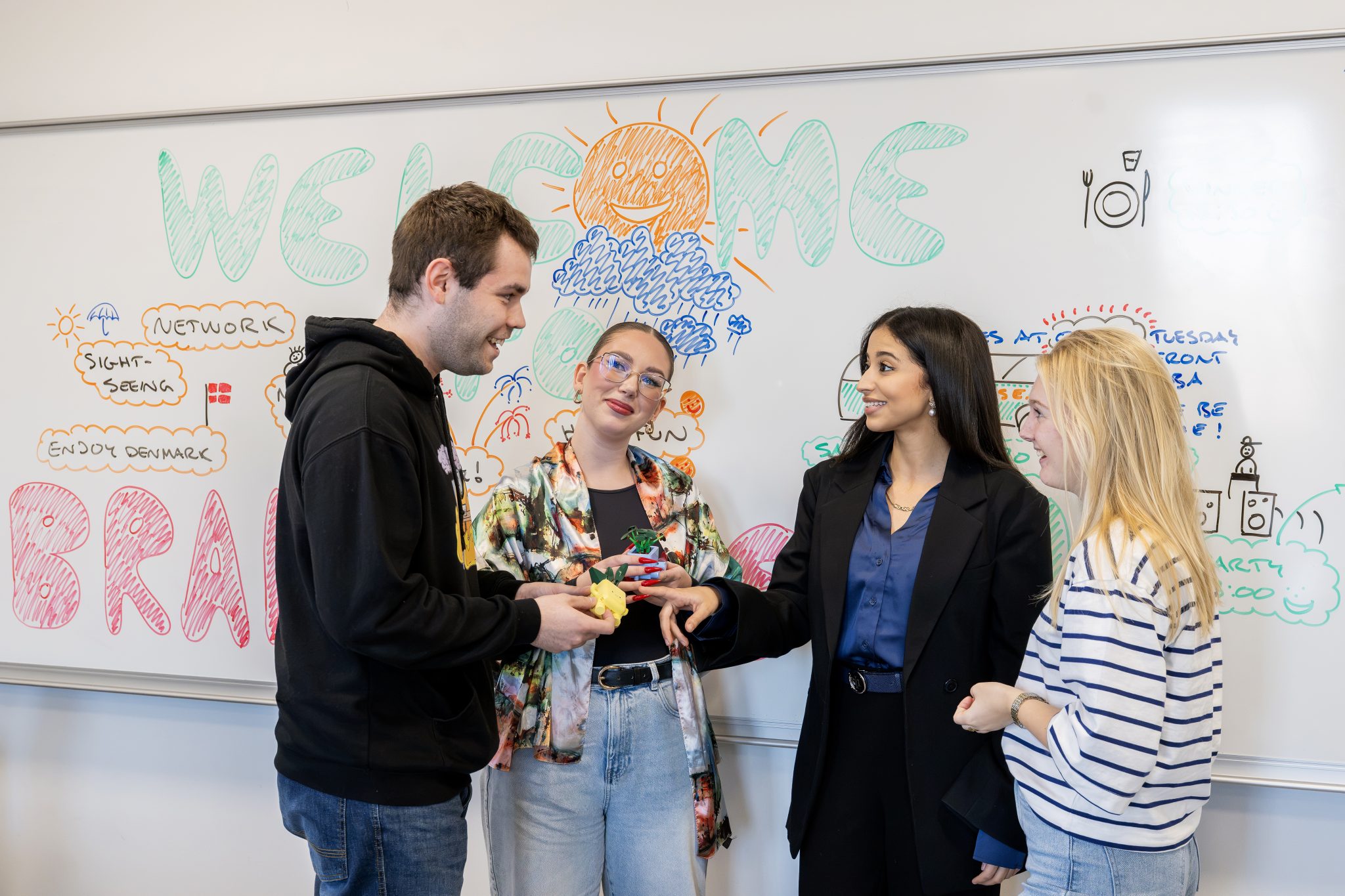
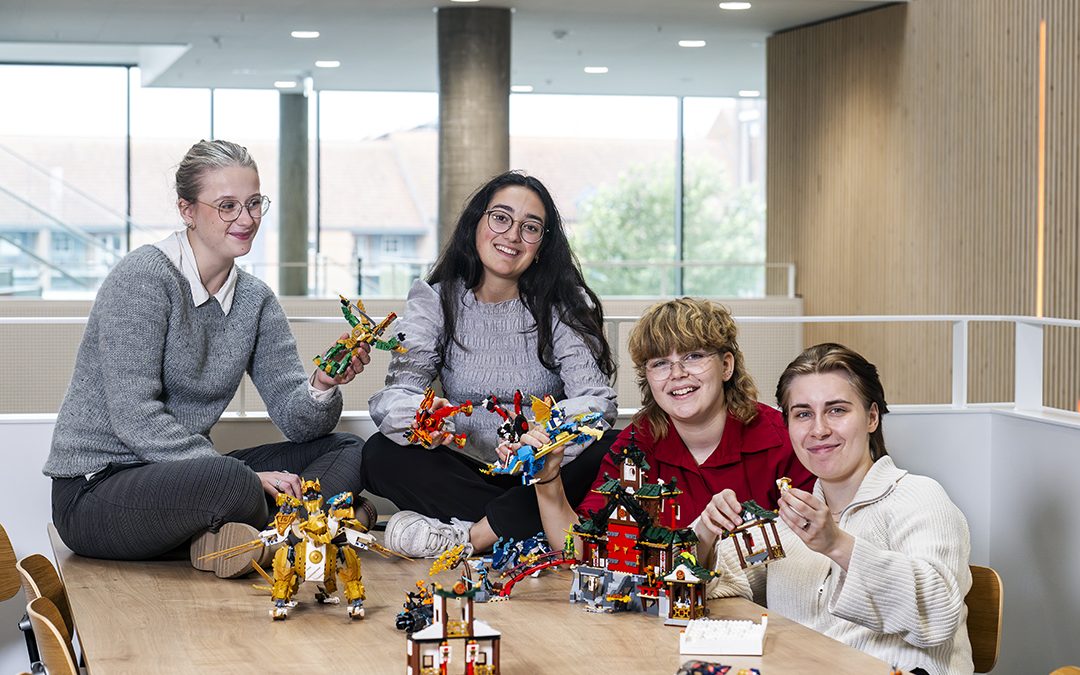
This joint program combines international business analysis with the development of practical, critical, and ethical AI collaboration skills.
Working in multicultural teams, students conceptualize a robot using LEGO materials and explore its potential applications in international markets. They use international business frameworks to compare market opportunities and risks in two countries and recommend a preferred market.
Throughout the project, students use generative AI to develop their robot concept, support research, organize information, and prepare their final report and presentation. They also engage AI as a collaborator, questioning its responses, inviting criticism of their own ideas, and evaluating its contributions.
The program aims to strengthen students’ understanding of international business while developing their ability to use AI effectively, exercise independent judgment, and take responsibility for AI-supported work.
Project Case
A robotics company is exploring opportunities to introduce new robotic applications into international markets. Working in multicultural teams, students conceptualize a robot using LEGO materials, identifying its intended function, application, and target industry. They then engage AI to question and refine their concept, explore alternative designs, and generate visual representations.
Acting as business consultants, teams evaluate market opportunities and risks in two countries at different stages of economic development. Using international business frameworks and research, they examine how national conditions influence demand, technological readiness, and the practical challenges of entering each market. Each team recommends the more attractive market for its proposed robot.

Challenge
The challenge extends beyond developing a robot concept and comparing markets. AI can quickly generate designs, information, analyses, and recommendations that appear credible but may contain inaccuracies, biases, or unsupported assumptions.
Through a series of project milestones, students engage AI in a collaborative process of questioning, testing assumptions, and challenging each other’s reasoning. Students use AI to support research, organize information, and develop project deliverables while critically evaluating its contributions and inviting AI to critique their own ideas and conclusions. At each stage, they assess the quality of the evidence, the ethical use of AI, and their responsibility for the work produced.
The central challenge is to develop an independent, evidence-based recommendation while demonstrating critical thinking, ethical judgment, and accountability for AI-supported decisions.
Project description
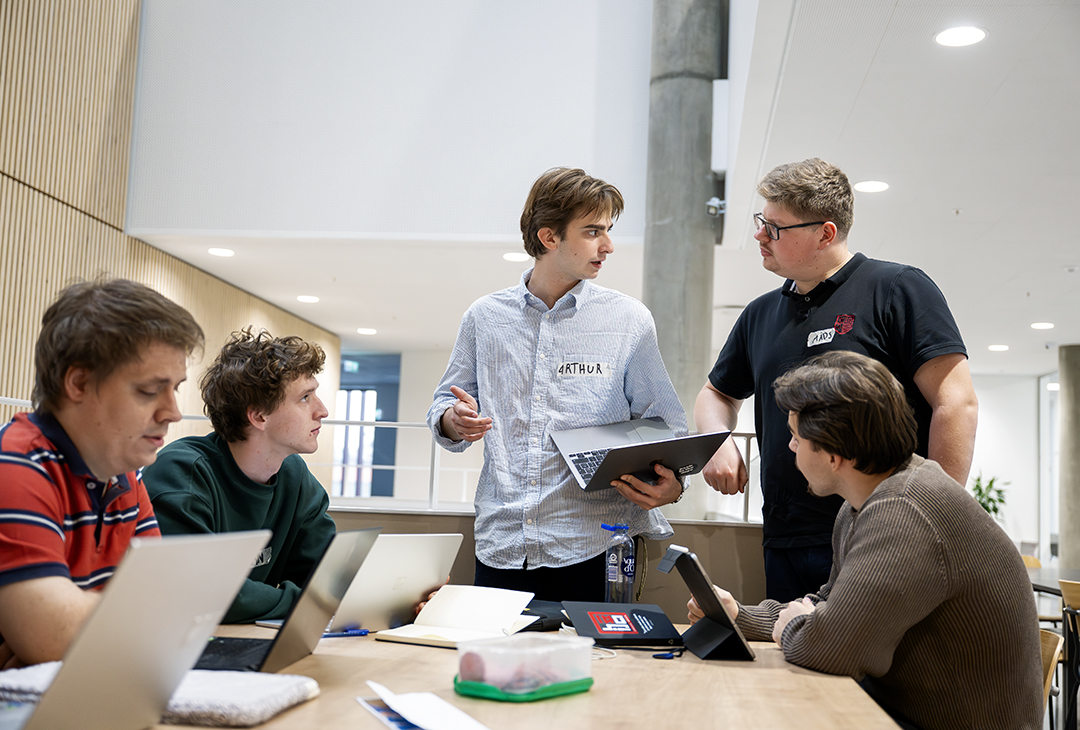
The program combines short lectures, practical exercises, AI experimentation, and collaborative project work. International business instruction introduces frameworks for examining country environments, market opportunities, and the challenges of international expansion. AI learning activities focus on effective collaboration, critical evaluation, ethical use, and human oversight. Students explore how to engage AI in dialogue, challenge its responses, and use it to improve their research, analysis, and communication.
The project progresses through a series of milestones that integrate business analysis with AI learning. Students experiment with AI to refine their ideas, identify research sources, organize data, create visuals, and develop their report and presentation. At pivotal stages, teams reflect on how they used AI, evaluate its contributions, and consider how to improve their collaboration. The program concludes with team presentations and individual reflections on what students learned about international business and working effectively and responsibly with AI.
Project Objectives
- Develop an understanding of how economic, political, cultural, and technological environments influence international business opportunities and risks.
- Apply international business frameworks to compare markets and evaluate the challenges of entering foreign countries.
- Develop practical skills in using AI for research, analysis, creative development, and communication.
- Strengthen critical thinking, ethical judgment, and independent decision-making through constructive AI collaboration and multicultural teamwork.
Expected Outputs
- A conceptual robot design illustrating its intended application and target industry.
- A comparative assessment of two international markets, including opportunities, risks, market-entry considerations, and a justified recommendation.
- A brief written report and team presentation incorporating AI-supported research, analysis, and visual materials.
- An individual reflection evaluating AI collaboration, its influence on students’ thinking and work, and lessons learned about responsible AI use.
Learning outcomes and competencies obtained from this course
Upon completion of the program, students will be able to:
- International Business Environment: Analyze how economic, political, cultural, and technological conditions influence international market opportunities and risks.
- Market Assessment: Apply international business frameworks to compare two countries, assess market-entry considerations, and justify a market recommendation.
- AI Collaboration: Constructively engage with AI to explore problems, challenge assumptions, consider alternative perspectives, and refine ideas. Use AI to support research, organize and analyze information, develop visual materials, and communicate findings.
- Critical and Ethical AI Use: Critically evaluate AI-generated information, exercise independent judgment, and demonstrate ethical use, human oversight, and accountability for AI-supported work.
- Intercultural Teamwork: Collaborate across cultures to evaluate different perspectives, solve problems, and reach shared decisions.
- Communication and Reflection: Present and defend recommendations while evaluating how AI influenced their analysis, decisions, and learning.
Virtual Component
The virtual component introduces students to the business challenge and encourages reflection on their current use of generative AI.
Students keep a brief diary of their AI interactions in academic, personal, or work settings, examining when and why they use AI, how much they trust its responses, and how it influences their thinking and decisions. Students also conduct preliminary research on robotics, potential applications, and industries using their preferred research methods. They document their approach, sources consulted, and challenges encountered, providing a basis for comparing their initial research practices with the AI collaboration skills developed during the program.
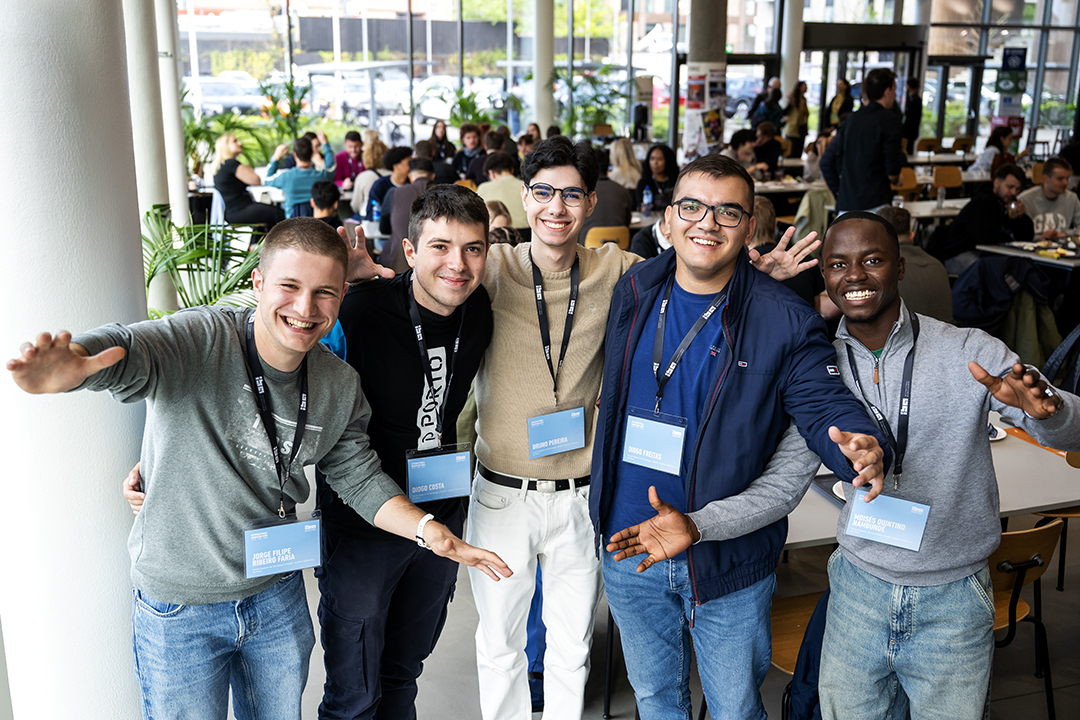
Where possible, students are organized into multicultural teams before the on-site week and participate in a virtual meeting to introduce themselves and share initial observations. A learning management system supports access to course materials, submission of pre-assignments, team communication, and collaborative activities throughout the program. These activities establish a foundation for the on-site project and subsequent reflection on students’ development.
Why Would This Programme Be Valuable for Participating Students?
Today’s students are entering a global business environment where AI is increasingly embedded in everyday operations, products, and decisions.
As future managers, they will need to understand how economic, political, cultural, and technological differences shape international business opportunities while learning to use AI effectively and responsibly.
Working in multicultural teams, students will gain practical experience analyzing international markets, evaluating competing perspectives, and developing evidence-based recommendations. They will also learn to collaborate with AI as both a practical tool and a critical thinking partner, while recognizing its limitations and maintaining independent judgment.
These experiences will help prepare students to navigate international business challenges and take responsibility for AI-supported decisions that affect organizations and their stakeholders.
Practical information
Location: International Business Academy, Havneparken 1, 6000 Kolding, Denmark.
Dates: 21-25th June 2027 (arrival on Sunday, 20th June).
Registration deadline: 1st March 2027
Please register HERE (TBA soon)
Price: 350€ (for students) Pay the participation fee online here (link coming soon)
Included in the price:
- Accommodation (5 nights, Sunday to Friday)
- Breakfast (x 5, Monday to Friday)
- Lunch (x 5, Monday to Friday)
- Dinner (x 2, Monday & Thursday)
There is no participation fee for staff and lecturers. You will have to book and pay for your accommodation yourself
Participants are kindly requested to bring traditional snacks/sweets/candy from their home country, for the ‘International Food Tasting’ that is included in participants’ presentations of their school and country.
Transportation
Billund Airport (BLL) is the closest airport to Kolding. There is a direct bus from the airport to Kolding (no. 166), but please note that bus transportation is not very frequent in the evening.
Copenhagen Airport (CPH) is about 2.5 hours away from Kolding, with frequent train and travel times.
You can use RejsePlanen to plan your journey/buy tickets, if you are using public transportation.
Accommodation
Kolding Hotel Apartments
Kedelsmedgangen 2,
DK-6000 Kolding, Denmark
https://www.koldinghotelapartments.com/
The rooms are pre-booked for participants of the international week. Students will be divided into apartments by gender, and each apartment has the capacity for six students (two-four in each bedroom), with a shared kitchen and bathroom. The accommodation is in downtown Kolding, around 1.5 km away from IBA (7-10 minutes’ walk).
IBA Coaches
You can contact the international office if you have any questions about the academic part of the programme (assignments, timeline etc.).

| Anna Barseghyan |
| anba@iba.dk |
| +45 20 78 21 36 |
| International Coordinator, Incoming Student and Staff Mobility |

| Ildikó Antal |
| ilan@iba.dk |
| +45 25 28 45 47 |
| Director, IBA International & Confucius Institute |
If you have any questions, please write to us at studyexchange@iba.dk
Contact

| IBA International Office |
| studyexchange@iba.dk |
| Student & Staff Mobility |
| Ildikó Antal |
| ilan@iba.dk |
| +45 25 28 45 47 |
| Director, IBA International & Confucius Institute |